Former Marine Helps Elderly Woman Bring Records in Alleged Fraud Case to Authorities
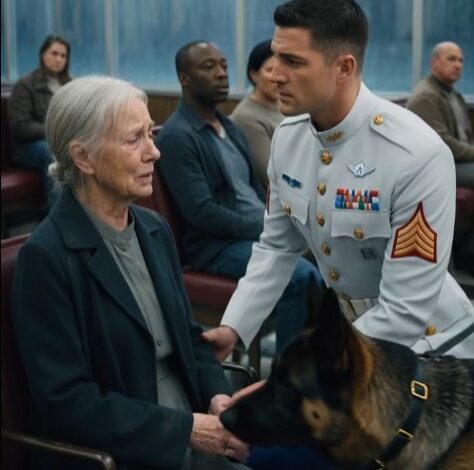
Former Marine Helps Elderly Woman Bring Records in Alleged Fraud Case to Authorities
A chance meeting during a storm
A stop at a roadside diner in West Texas became the beginning of a much larger investigation after former Marine Daniel Brooks encountered an elderly woman who appeared frightened and asked for immediate help.
Brooks had pulled in for coffee while traveling with Atlas, a German Shepherd that had served beside him during his final military assignment. The diner was nearly empty as heavy rain hit the windows and the weather worsened outside.
That quiet was broken when an elderly woman later identified as Evelyn Carter entered the building, visibly anxious and soaked from the storm. She approached Brooks and quietly asked whether he would pretend to be her grandson for a few moments.
A claim of authority raises more concern
Minutes later, a black SUV arrived and a man identifying himself as Victor Hale entered the diner. He said Evelyn was under the care of a private assisted living facility and had left unexpectedly.
Evelyn immediately objected and said she did not want to return with him. Hale displayed documents that he said confirmed his authority, but Brooks noticed that Evelyn appeared even more uneasy in his presence. He also saw two other men lingering outside near the entrance.
Rather than reacting quickly, Brooks watched the exchange and assessed both sides. He came to believe Evelyn’s fear was genuine and declined to let her leave with Hale.
Evelyn explains why she ran
After leaving the diner with Evelyn and Atlas, Brooks later stopped at a small motel and asked her to explain what had happened. She said her late husband, Harold Carter, had worked as an accountant for Red Mesa Energy and had discovered records involving shell accounts, suspicious transfers, and questionable project approvals.
According to Evelyn, Harold intended to report what he found but died not long afterward in what was described as a vehicle accident. She said she never fully accepted that explanation. After his death, she found a flash drive and notebook containing names, dates, account details, and other records he had collected.
She believed those materials later led to pressure on her to sign legal documents transferring authority over assets and property matters. When she refused, she said she was placed in a facility where her movement and communication were limited.
The records reach investigators
Brooks took Evelyn to Colorado to meet Miguel Torres, another former Marine who later entered federal investigative work. After reviewing the files, Torres concluded the material could point to a broader pattern of misconduct connected to land contracts, approvals, and possible misuse of legal control over vulnerable people.
Brooks and Torres then brought the records to Special Agent Rebecca Langford in Colorado Springs. Authorities moved quickly after reviewing the material, freezing accounts, securing records, and reviewing properties connected to the case. The assisted living facility Evelyn named was later shut down during the inquiry.
A turning point for Evelyn
Three days after the records were submitted, Harold Carter’s death was officially reclassified from an accident to a homicide investigation. For Evelyn, that change meant the concerns she had carried for years were finally receiving serious review.
In the days that followed, she visited Harold’s grave while Atlas stayed close beside her and Brooks gave her space. She thanked him for helping protect her and for making sure the records reached the right people.
What began as a strange request inside a diner during a storm became a turning point in an investigation involving alleged fraud, coercion, and concealed records. For Brooks, it was a reminder that an ordinary stop can become the moment when a hidden story finally begins to surface.