Pelosi Goes On Wild Tirade Against Trump, Calls Him a ‘Vile Creature’
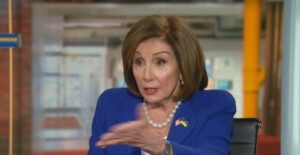
Former House Speaker Nancy Pelosi delivered a sharply worded critique of President Donald Trump during a public appearance in Washington, D.C., launching a series of accusations that reignited partisan tensions. Speaking at what became an emotionally charged press event, Pelosi accused the former president of undermining democratic institutions and behaving in ways she described as dangerous to the country.
During her remarks, Pelosi said, “Donald Trump is the worst president for the children we have ever had. And that is why we must organize to stop his extreme agenda and save our health care.” She went on to label Trump a “vile creature,” intensifying her rhetoric as she expanded on her concerns during a subsequent interview with CNN’s Anderson Cooper.
Pelosi alleged that Trump has acted like a monarch rather than an elected leader, claiming he does not respect constitutional boundaries. “Our founders did not want a king, so they separated the power. That’s the beauty of the Constitution,” she said. She further accused him of undermining democratic institutions, asserting, “Because he’s the President of the United States, and he does not honor the Constitution of the United States. In fact, he’s turned the Supreme Court into a rogue court. He’s abolished the House of Representatives, he’s chilled the press. He’s scared people who are in our country legally, but making them – smashing into their cars and the rest.”
Her remarks quickly drew national attention, intensifying debate over the tone and substance of political discourse as the country heads deeper into a contentious election cycle. Pelosi’s comments also revived scrutiny of her own long political career, including her leadership tenure and financial history, as critics and supporters alike weighed in on the exchange.
The remarks came at a time when Pelosi has announced plans to retire from Congress in 2027, marking the approaching end of one of the longest and most influential careers in modern Democratic politics. That context has added further attention to her statements, as they are viewed by some as part of a broader effort to shape her political legacy.