Transgender Dad Outraged After Revealing Word Nurses Used To Refer To Him
Respecting a person’s name and pronouns is widely recognized as a basic expression of dignity, yet real-world experiences show that this respect is not always upheld—particularly in sensitive environments such as healthcare. One such case involves Bennett Kaspar-Williams, whose experience during the birth of his child highlighted ongoing challenges faced by transgender and non-binary individuals.

Kaspar-Williams, 37, and his husband, Malik, welcomed their son Hudson in October 2020 via cesarean section. At the time, Kaspar-Williams identified as male and used he/him pronouns. Today, he identifies as non-binary and uses both he/him and they/them pronouns. Despite clearly documenting his gender identity in medical records, he encountered repeated misgendering from hospital staff during labor and delivery.
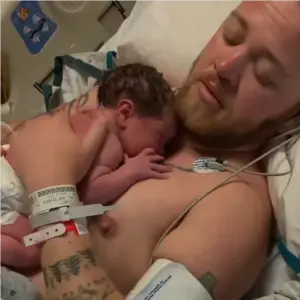
Throughout his hospital stay, nurses routinely referred to him as a mother rather than acknowledging him as a father. The experience proved deeply distressing, particularly during a moment that was otherwise significant and personal. The repeated use of incorrect language underscored how entrenched assumptions about gender and childbirth remain within medical institutions.
Kaspar-Williams began his gender transition in 2014, after recognizing he was transgender in 2011. He underwent top surgery but chose not to pursue lower body procedures. His decision to carry a pregnancy was intentional and thoughtful, separating physical capability from gender identity. While he described pregnancy and childbirth as meaningful, the emotional toll of being misgendered overshadowed aspects of the experience.
Despite ensuring that medical forms accurately reflected his gender, interactions with staff continued to disregard that information. For Kaspar-Williams, this disconnect illustrated a broader issue: the persistent belief that pregnancy and parenthood are inherently tied to womanhood.
As his experience became public, it sparked wider discussion about inclusivity in healthcare and the importance of honoring individuals’ identities, especially during critical life events. That conversation only deepened as Kaspar-Williams articulated the broader implications of what he endured.